
THCV: The other THC you may not have heard about - By Leonard Leinow
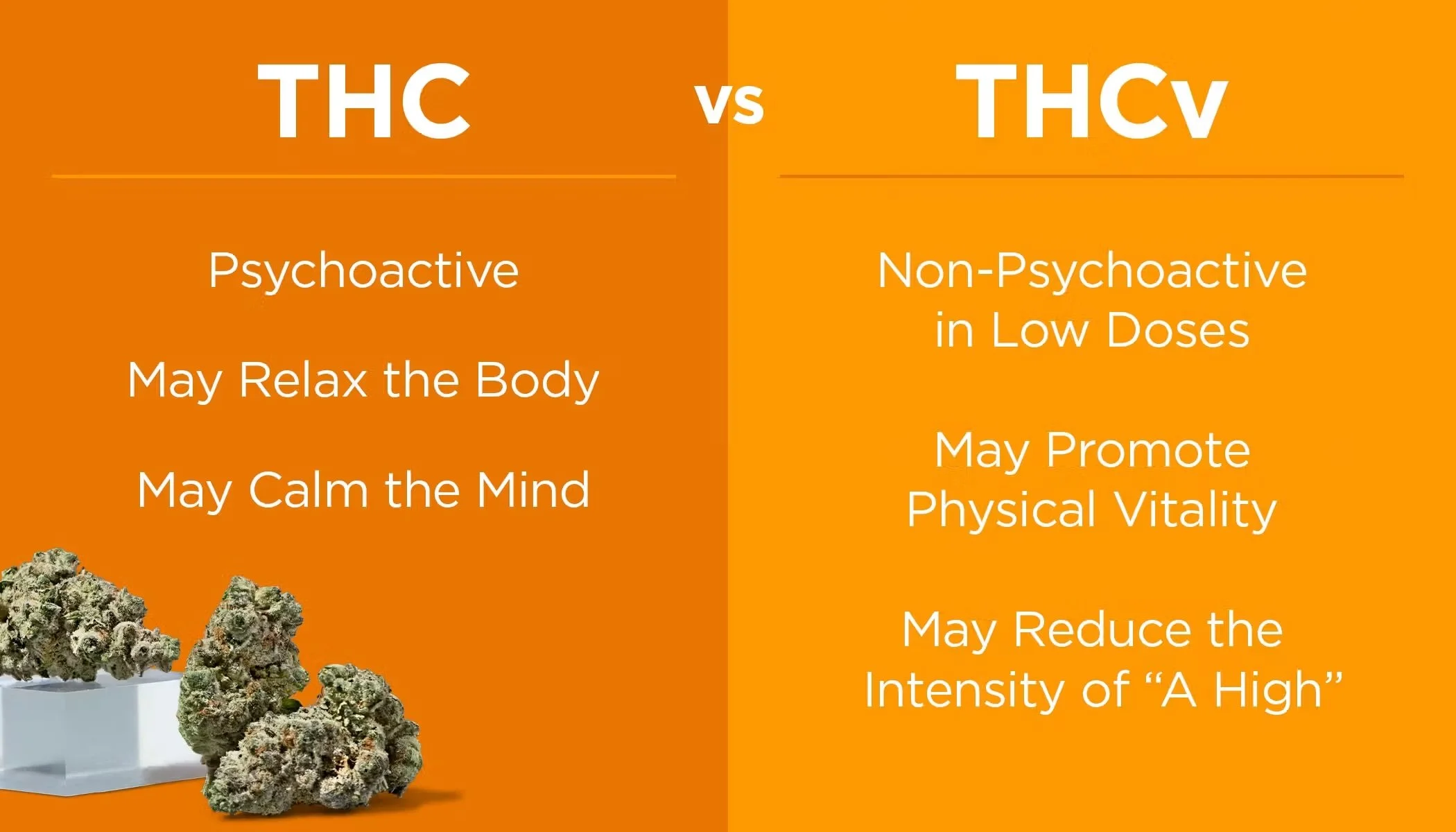
When most people hear the word THC, they think of the familiar cannabinoid responsible for the cannabis "high." But THC has a lesser-known cousin that is attracting increasing attention from researchers: tetrahydrocannabivarin, or THCV.
Despite its name, THCV is not simply a weaker version of THC. It has a very different personality, and that difference may turn out to be medically important.
THCV is one of the many minor cannabinoids produced by the cannabis plant. It is fairly rare and shows up in land race strains from South Africa. What makes it particularly interesting is the way it interacts with our endocannabinoid system. At lower doses, THCV can act as an antagonist at the CB1 receptor, essentially putting the brakes on some of the effects associated with THC. It also interacts with CB2 receptors and several other biological pathways. Interestingly, the precise pharmacology of THCV is more complicated than the simple "CB1 blocker/CB2 activator" description often given to it. Its effects can change with dose.[1]
Appetite
One of the most intriguing differences between THC and THCV concerns food.
THC is famous for producing the munchies. THCV, on the other hand, reduces appetite and influences metabolic processes. This has led researchers to investigate THCV role in weight management and metabolic health.[2]
There is an important caveat here: the idea that THCV is a proven weight-loss cannabinoid has gotten ahead of the science. Much of the evidence comes from laboratory and animal research, and human studies have been relatively small. A recent review concluded that THCV shows promise for appetite and metabolic regulation, but that larger clinical trials are still needed.[3]
In other words, THCV is interesting. It is not yet a magic diet pill.
Blood sugar
Perhaps the most encouraging human research concerns blood glucose.
In a randomized, double-blind, placebo-controlled study, 62 people with type 2 diabetes received THCV, CBD, combinations of the two, or placebo for 13 weeks. The group taking 5 mg of THCV twice daily experienced a significant reduction in fasting blood glucose and an improvement in pancreatic beta-cell function. THCV was also reported to be well tolerated during the study.[4]
This is only one relatively small clinical trial, so it is far too early to call THCV a treatment for diabetes. But it gives us something important that many cannabinoid claims lack: human clinical evidence pointing in the same direction as the laboratory research.
Brain function
This is where THCV becomes especially intriguing.
Researchers have been investigating THCV for possible neuroprotective effects, including its potential role in conditions involving inflammation, oxidative stress and degeneration of nerve cells.
Some of the most interesting work has involved Parkinson's disease. In animal models, THCV has reduced motor problems and helped protect dopamine-producing neurons. Researchers believe that several mechanisms may be involved, including its effects on cannabinoid receptors and its antioxidant properties.[5]
But we need to keep our feet firmly planted on the ground here. A promising result in a mouse or rat is not the same thing as a successful treatment in a human being.
We have not yet established that THCV prevents Parkinson's disease or slows its progression in people. However, as a management tool, THCV does help lessen the tremors from several of Synergy's Parkenson’s patients.
I would like to point out that one of our staff members, who has mild essential tremors, uses Synergy’s THCV tincture (Black Beauty strain). She takes a very small amount, just 3 drops (0.5mg). With each dose, her tremors stop for 4-5 hours, every time. She has been using THCV with good results for 7 years. We have also seen THCV have good results for people with restless leg syndrome and PTSD.
Clear-headed Energy
THCV has also developed a reputation for producing a more energetic, clear-headed experience than traditional THC. Many people who use THCV-containing cannabis products describe feeling alert rather than sleepy or mentally foggy.
There is some scientific rationale for investigating THCV's effects on attention, motivation and brain function. There is evidence that THCV improves ADHD, memory, productivity or cognitive performance.
Anti-inflammatory
THCV's effects may extend beyond appetite, metabolism and the brain. Early research suggests that it can influence inflammatory and pain-related pathways, including interactions with cannabinoid receptors and other molecular targets.[1,6]
So, what do we really know?
I think the most sensible way to look at THCV today is as a promising cannabinoid that is still waiting for its full medical story to be written.
The strongest reasons for interest include its unusual interaction with the CB1 receptor, its potential influence on appetite and metabolism, encouraging preliminary evidence involving blood glucose, and intriguing neuroprotective findings from animal research.
THCV also reminds us of something I have been saying for years about cannabis: we should stop thinking of the plant as simply THC and CBD. Cannabis produces a remarkably diverse family of cannabinoids, each with its own pharmacology and potential therapeutic properties.
We have only begun to understand what some of these compounds can do.
THCV exhibits potential as an appetite suppressant, neuroprotective and cognitive enhancer. THCV is certainly a cannabinoid worth watching.
On Sale
Synergy Wellness has 3 THCV tinctures, #107, #108, #109. These are usually $90/oz. They will be on sale for $75, a discount of 17%, for the month of September. Half ounce bottles are also available, if you want to try it out before making a bigger commitment.
References
Haghdoost M, Peters EN, Roberts M, Bonn-Miller MO. Tetrahydrocannabivarin is Not Tetrahydrocannabinol. Cannabis Cannabinoid Res. 2025;10(1):1-5. doi:10.1089/can.2024.0051. PMID: 38995871.
Jadoon KA, Ratcliffe SH, Barrett DA, et al. Efficacy and Safety of Cannabidiol and Tetrahydrocannabivarin on Glycemic and Lipid Parameters in Patients With Type 2 Diabetes: A Randomized, Double-Blind, Placebo-Controlled, Parallel Group Pilot Study. Diabetes Care. 2016;39(10):1777-1786. doi:10.2337/dc16-0650. PMID: 27573936.
Jager G, Witkamp RF, et al. Neural effects of cannabinoid CB1 neutral antagonist tetrahydrocannabivarin on food reward and aversion in healthy volunteers. International Journal of Neuropsychopharmacology. 2015. doi:10.1093/ijnp/pyu094. PMID: 25542687.
García C, Palomo-Garo C, García-Arencibia M, Ramos JA, Pertwee RG, Fernández-Ruiz J. Symptom-relieving and neuroprotective effects of the phytocannabinoid Δ9-THCV in animal models of Parkinson's disease. British Journal of Pharmacology. 2011;163(7):1495-1506. doi:10.1111/j.1476-5381.2011.01278.x. PMID: 21323909.
The plant cannabinoid Δ9-tetrahydrocannabivarin can decrease signs of inflammation and inflammatory pain in mice. British Journal of Pharmacology. 2010. doi:10.1111/j.1476-5381.2010.00756.x. PMID: 20590571.
The role of tetrahydrocannabivarin (THCV) in metabolic disorders: A promising cannabinoid for diabetes and weight management. 2025. PMID: 40270953.