Our cannabis knowledge is increasing exponentially thanks to scientific enquiry and we are constantly learning more about the potential health benefits of cannabinoids.
So far, over a hundred cannabinoids have been identified in the cannabis plant and research is underway to discover the attributes of many of these unique compounds. Current studies show particular interest in CBV, CBC and THCV.
Cannabinoids derived from cannabis are phytocannabinoids, meaning from plants, incredibly they match the endocannabinoids that exist in all mammals and play a central role in maintaining health.
Medical science now acknowledges that auto-immune conditions are linked to deficiencies in the endo-cannabinoid system (ECS) and that an emphasis on a healthy ECS brings wide-reaching health benefits. Well documented successful treatment of epilepsy, digestive disorders, arthritis, anxiety and depression and cancer are driving more research.
Currently it’s open season for scientific cannabinoid studies and new research is revealing other plants which contain significant phytocannabinoids.
We are living through a paradoxical moment in cannabinoid awareness: On the one hand, scientific research shows how cannabinoids support our ECS ( Endocannabinoid system) which functions to maintain balance in the body, on the other hand, cannabis, the main source of phytocannabinoids remains illegal in many countries. The legal issues of cannabis stem from the presence of THC, the only psychotropic cannabinoid that has been discovered.
This has led to the extraction of cannabinoids, most notably CBD, from industrial hemp, which contains less than 0.3% THC. Hemp doesn’t contain the same level of cannabinoids as cannabis so hemp-derived CBD means vast amounts of hemp are needed to meet demand.
Science has revealed that small amounts of cannabinoids occur in a wide range of plants; chocolate, black pepper and liverwort are just three examples. Though these sources are not viable for extraction, other plants are yielding some astonishing results.
A recent study by a team led by molecular biologist Rodrigo Moura Neto of the Federal University of Rio de Janeiro, has discovered that a common weed that grows all over Brazil contains large amounts of CBD, but no THC.
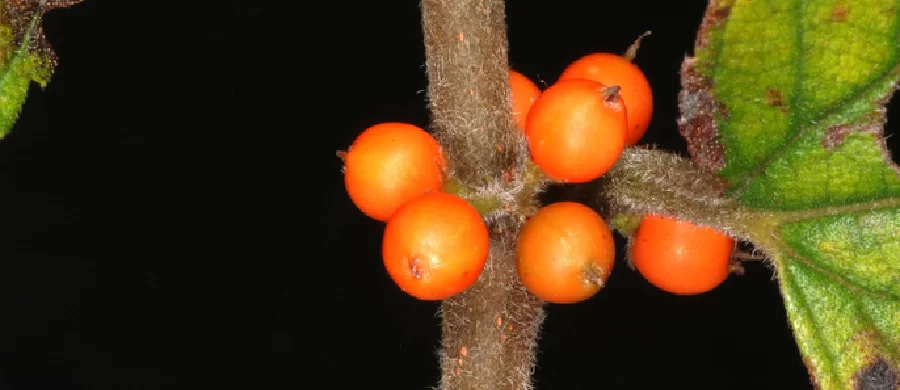
Trema Micrantha Blume is a prolific shrub, native to South America and growing wild all over the sub-continent. Neto’s research team found high levels of CBD in the plant and have been awarded a research grant from the Brazilian government to continue their work. Neto is excited about the possibility of a viable source of CBD which sidesteps the illegality of cannabis in Brazil.